
Search La Plata County Court Records
The main free starting point is the Colorado Judicial Branch Docket Search. For La Plata County Court records, use the date required by the state form plus a local filter such as La Plata County, La Plata County Courthouse, or Sixth Judicial District. The docket search is best for hearing dates and public case events. It does not replace the Clerk of Court when a certified order, decree, probate copy, older file, or full document is needed.
Other channels fill the gaps. CoCourts provides paid Register of Action data for many public Colorado court cases, with exclusions for sealed, juvenile, and probate case types. Colorado State Courts Data Access is login-gated and says it contains court data, not documents. Durango Municipal Court keeps city summons and municipal traffic files. Sheriff and DA criminal justice records use separate written request paths.
- Identify whether the record is a state court case, municipal case, sheriff record, DA record, recorder document, or jail custody record.
- Use Colorado Docket Search for District Court and County Court hearing dates and public docket events.
- Use CoCourts or Data Access only when public case data, not certified documents, is enough.
- Contact the Clerk of Court for court documents, certified copies, sealed-record questions, probate files, and older cases.
- Use the County Clerk and Recorder for recorded documents and marriage licenses, not court case files.
The official La Plata County government homepage links users into county services that sit outside the court system.
That county hub is useful for recorder, sheriff, public records, and local service pages that are separate from court dockets.
Where La Plata County Court Records Are Kept
La Plata County uses a split clerk structure. The Clerk of Court at the La Plata County Courthouse is the access point for District Court and County Court case files, including civil, criminal, traffic, divorce, probate, and certified court copies. The County Clerk and Recorder, led by Tiffany Lee in the county research, handles recorded documents, marriage and civil-union licenses, elections, and motor vehicle services from 679 Turner Drive, Suite C.
That split prevents many search mistakes. A divorce decree is a District Court record. A marriage license is a Clerk and Recorder record and is not available online through iDoc Market. A deed, deed of trust, release, assignment, notice of trustee sale, mechanic’s lien, or plat is a recorded document, not a court case. A sheriff report or local background check routes to Sheriff Records under criminal justice records rules.
The La Plata County online public records index collects many county records that are not court files.
Use it for county records, but return to the Judicial Branch and Clerk of Court for court case documents.
La Plata County Courthouse
The La Plata County Courthouse is at 1060 East Second Ave, Suite 106, Durango, CO 81301. The Clerk of Court phone is 970-247-2304, and the official email is laplataclerk@judicial.state.co.us. The building includes state court operations, District Court and County Court functions, the Clerk of Court, courtrooms, jury reporting, court security, probation, the District Attorney office, and a federal District Court presence in Suite 150.
Public counter hours differ by office. General building hours are Monday-Friday 7:30 a.m.-5:00 p.m.; the Court Clerk window is Monday-Friday 7:30 a.m.-4:30 p.m. excluding state holidays. The District Attorney office in the courthouse has its own hours. The County Clerk and Recorder has a different schedule and is closed Fridays. Users should not assume one countywide 8-to-5 schedule.
La Plata County Clerk of Court
1060 East Second Ave, Suite 106
Durango, CO 81301
970-247-2304
laplataclerk@judicial.state.co.us
Sixth Judicial District Attorney
1060 2nd Ave., Suite B10
Durango, CO 81301
970-247-8850
State criminal prosecution office
Sheriff Records Division
283 Girard Street
Durango, CO 81303
970-247-1157
Local background checks and sheriff records
The county justice-system service page links courts, the District Attorney, jury duty, legal resources, and victim assistance.
That page is a useful local bridge when a record search turns into a court visit or agency contact.
La Plata County Judicial System
Colorado’s court hierarchy starts with the Colorado Supreme Court, then the Colorado Court of Appeals, then trial courts. District Courts are general-jurisdiction trial courts. County Courts are limited-jurisdiction state courts. Municipal Courts are locally funded courts for ordinance matters. La Plata County sits in the Sixth Judicial District with Archuleta and San Juan counties, and Durango is the county seat and local court hub.
| Court | Jurisdiction | La Plata County examples |
|---|---|---|
| District Court | General state trial court | Felony, civil in any amount, divorce, probate, juvenile, mental health, water-related claims. |
| County Court | Limited state trial court | Misdemeanors, traffic, evictions, small claims, civil under $25,000, restraining orders. |
| Durango Municipal Court | Local city court | Municipal summons, city traffic, parking, and ordinance matters in city limits. |
| Federal Court | Federal law matters | District of Colorado cases and federal jury activity in a separate courthouse suite. |
Appeal path: County Court decisions may move to District Court in many contexts; District Court judgments generally move to the Colorado Court of Appeals, with some matters reaching the Colorado Supreme Court.
Types of La Plata County Court Records
La Plata County court records include civil lawsuits, criminal cases, traffic cases, domestic relations, probate, juvenile, mental health, protection orders, municipal cases, and some water-related claims. The court level controls the file. District Court handles felony, divorce, probate, juvenile, civil in any amount, mental health, adoption, and water-related claims. County Court handles lower civil, small claims, eviction, misdemeanor, traffic, and restraining order matters.
Court records can contain case numbers, parties, filings, motions, orders, judgments, charges, pleas, dispositions, sentence dates, scheduled events, and court notes. Data Access does not provide case documents. CoCourts provides Register of Action data with public-field limits. Full copies and certifications come from the clerk. Some records, such as juvenile, adoption, mental health, sealed, suppressed, confidential, victim, police officer, juror, and minor-identifying information, are not public in ordinary search systems.
- Docket
- A schedule or event list for a court case.
- Register of Action
- A summary of case activity reported from the state court system.
- Disposition
- The current or final outcome of a case or charge.
- Certified copy
- An official copy issued by the court clerk for legal use.
Public Access to La Plata County Court Records
Colorado public access depends on the record type. The Colorado Open Records Act applies to many public records unless another law makes the record nonpublic. The Colorado Criminal Justice Records Act applies to criminal justice records, with records of official action treated differently from discretionary criminal justice records. Court records also follow Chief Justice Directive 05-01 and P.A.I.R.R., as described by the Judicial Branch public access guide.
Key rules: CORA covers many public records; CCJRA covers criminal justice records; P.A.I.R.R. and CJD 05-01 govern Colorado court-system access; juvenile and sealing statutes can restrict access.
For La Plata County, ask the correct custodian. The Clerk of Court handles court files. Sheriff Records handles sheriff reports, local background checks, and some criminal justice records. The DA uses written request links for criminal justice and CORA records. County administrative records route through county public-records request links. The County Clerk and Recorder handles recorded documents and marriage records.
Restricted La Plata County Records
Restricted records include juvenile matters, sealed or suppressed cases, adoption records, mental health proceedings, some guardianship and conservatorship material, and personal identifiers. CoCourts excludes juvenile and probate case types, sealed cases, suppressed filings, and confidential filings. Social Security numbers and street addresses are omitted from public-facing data, and victims, police officers, jurors, and many non-primary party roles are non-public.
Colorado sealing rules are statute-driven. Adult criminal sealing can depend on the outcome, offense level, waiting period, restitution, pending cases, and exclusions. The Judicial Branch sealing self-help material should be used with the court that handled the case. A sealed record can remain available to courts, prosecutors, law enforcement, and other authorized users even when it is removed from ordinary public access.
Visiting La Plata County Court
Courthouse visits require time for screening. Deputies ask visitors to place cell phones, keys, wallets, and metal objects in trays. Laptops and tablets are removed from bags. Security may inspect belt buckles or steel-toe boots and may use a hand-held wand or pat-search if a person cannot walk through the metal detector. Prohibited items include weapons, dangerous items, lighters, vapes, matches, flammable liquids, aerosols, food, and beverages except clear liquids in clear plastic containers.
Courtroom rules require phones off in courtrooms, although hallway use is allowed. No food or drink is allowed except clear water containers. No gum, candy, or tobacco is allowed. Recording, broadcasting, and photography are prohibited unless allowed. Visitors must not talk while court is in session, must remove hats, and must stand when court opens, recesses, adjourns, or when addressing the court.
The courthouse security page gives local screening, courtroom, jury, and building-entry rules.
Those rules are part of a practical court-record trip when a file must be reviewed or copied in person.
Federal Court in La Plata County
Federal court is separate from Colorado state court. The U.S. District Court for the District of Colorado lists a Durango location at the La Plata County Courthouse, 1060 E. 2nd Avenue, Suite 150. Federal criminal cases are handled by the U.S. Attorney’s Office, not the local District Attorney. Federal appeals go to the U.S. Court of Appeals for the Tenth Circuit, while federal electronic records are searched through PACER and PACER Case Locator.
Do not search federal PACER for an ordinary La Plata County District Court divorce, probate, felony, or traffic case. Use PACER for federal district, bankruptcy, and appellate records. Bankruptcy records are handled by the U.S. Bankruptcy Court for the District of Colorado, which is based in Denver. State and federal court records can involve the same person, but they are separate files.
The federal courthouse location page lists the Durango federal court location in the La Plata County Courthouse.
This shared building can cause confusion, so match the case to state or federal court before searching.
La Plata County Criminal Court Records
State criminal cases involve several offices. The Sheriff may make an arrest and hold jail or booking records. The District Attorney screens felony referrals, decides whether to file, evaluates or amends charges, makes bond recommendations, litigates motions and trials, extends plea offers, and makes sentencing recommendations. The Clerk of Court keeps the criminal case file once the case is filed in court. The court, not the DA, sets bond and imposes sentence.
Criminal court records may show charges, counts, class, plea, disposition, sentence date, bond orders, probation terms, and scheduled events. A charge is not a conviction. A charge may be amended, reduced, dismissed, diverted, or resolved by plea or trial. For a fuller look at the filed case, use criminal court records. For the arrest-to-charge path, use court charge records.
The Colorado State Public Defender Durango office page identifies the local public defender office serving La Plata County and nearby counties.
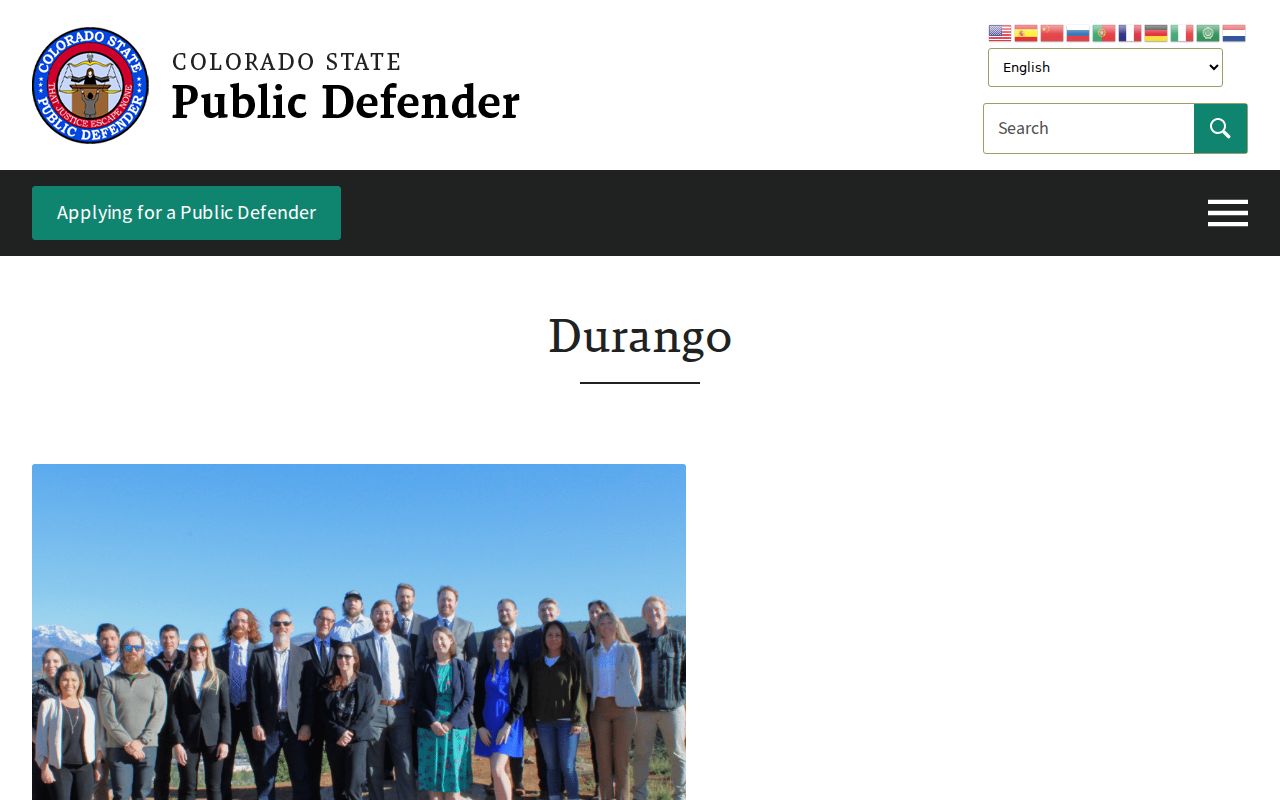
Defense access and public case access are different, so represented parties should coordinate records and discovery through counsel.
La Plata County Sheriff and Jail Records
The La Plata County Sheriff’s Office operates the county detention facility. Sheriff Sean Smith and Undersheriff Frank Sandoval are named in the county research. Sheriff Records is at 283 Girard Street, Durango, CO 81303, with office hours Monday-Friday 9:00 a.m.-4:00 p.m. The Detentions Division contact is 970-247-1161 ext. 2. The jail has 297 beds after a 2009 addition and houses pretrial detainees and sentenced inmates.
Current county jail custody is checked through VINE, which the county links as “Inmate in Custody at La Plata County jail.” State prison custody uses the Colorado DOC offender search. Immigration custody uses ICE’s detainee locator. Sheriff records requests, local background checks, and incident records use the Sheriff Records Division, not the Clerk of Court. Jail money, mail, phone, tablet, bond, and visitation systems have their own rules.
The Sheriff mission and local law-enforcement background page provides named leadership context for sheriff records.
Sheriff and jail records can support a criminal case search, but they remain separate from the court file.
Marriage Divorce and Probate Records
Marriage and civil-union records are handled by the County Clerk and Recorder, not the Clerk of Court. The county says marriage licenses and civil-union licenses are not available online in iDoc Market. Certified marriage copies are through the Clerk and Recorder. Divorce records are District Court domestic relations records, with dockets and case data searched through court tools and certified decrees requested from the Clerk of Court.
Probate in La Plata County is handled by the Probate Division of District Court rather than a separate local probate court. Probate can include wills, estates, guardianships, conservatorships, trusts, notices, inventories, accountings, orders, and letters. CoCourts says probate case types are not included, so probate record access should go through the Clerk of Court. Guardianship and conservatorship files may include restricted medical, financial, or protected-person information.
| Record | Custodian | Important limit |
|---|---|---|
| Marriage license | County Clerk and Recorder | Not available online through iDoc Market. |
| Divorce decree | Clerk of Court | District Court domestic relations file. |
| Probate file | Probate Division of District Court | CoCourts excludes probate case types. |
La Plata County Traffic Records
Traffic records split by issuing agency. Citations issued by Colorado State Patrol and the La Plata County Sheriff’s Department are heard at the La Plata County combined courthouse. Durango Municipal Court handles municipal traffic, parking, and city-code summons issued by Durango Police, Fort Lewis College Police, and certain La Plata County Animal Protection matters within city limits. Accident-related Durango citations require appearance, and several listed offense types cannot be paid online.
Court traffic records are not the same as Colorado DMV driver records. A court traffic record can show citation, charge, court date, plea, disposition, fine, order, failure to appear, and case events. A DMV Motor Vehicle Record shows license status, reported convictions, points, and suspensions depending on record type. Driver record requests use Colorado DMV or myDMV, not the court clerk.
La Plata County Record Fees
Only fees confirmed in the research should be used. The County Clerk and Recorder’s recording fees changed under HB24-1269 effective July 1, 2025, with recorded documents charged a flat $43 per document regardless of page count plus any additional state documentary fee where property is conveyed. Copy requests for recorded documents may include a $5 handling fee plus $0.25 per page. Marriage and civil-union licenses cost $30, and certified marriage copies are $1.25 each.
| Item | Amount / rule | Office |
|---|---|---|
| Recorded document | $43 per document, plus any applicable state documentary fee. | County Clerk and Recorder |
| Recorded-document copy request | $5 handling plus $0.25 per page. | County Clerk and Recorder |
| Marriage or civil-union license | $30. | County Clerk and Recorder |
| Sheriff local background check | $10 for local La Plata County only. | Sheriff Records Division |
History of La Plata County Courts
La Plata County was established February 10, 1874, and Durango became the county seat and central legal hub after it was founded in 1880 and incorporated in 1881. The county name means “the silver” in Spanish and is tied to the La Plata River and La Plata Mountains. The courthouse now reflects Durango’s regional role by housing state court functions, local justice offices, and a federal District Court presence.
The Clerk and Recorder’s records add an archival anchor. The county distinguishes recorded documents from 1874-1989 alpha index records and 1989-present public documents. Those are not court case files, but they show the depth of local public records. The modern court structure places La Plata County in Colorado’s Sixth Judicial District, with District Court and County Court handling different parts of the trial-court workload.
La Plata County Court FAQ
Where do court record searches start? Start with Colorado Judicial Branch Docket Search for District Court and County Court dates. Use the Clerk of Court for documents, certifications, older files, probate questions, and records not visible online.
Are La Plata County court records the same as recorder records? No. Court records are kept by the Clerk of Court. Deeds, recorded documents, and marriage licenses are handled by the County Clerk and Recorder.
Does La Plata County have an online warrant list? No official online active warrant list was found in the research. Contact Sheriff Records, the Clerk of Court, or Durango Municipal Court depending on the warrant source.
Can a docket be used as a certified court record? No. A docket can show events and dates, but certified copies must come from the court clerk.
Public Record Search
Sponsored Results