
La Plata County Arrest Records and Charges
An arrest record is generated on the law-enforcement or jail side. It may involve the arresting agency, booking, custody status, bond, and local criminal justice records held by the Sheriff. A court charge record begins when a complaint, information, citation, summons, or other charging document is filed. In La Plata County, state criminal charges may begin in County Court for misdemeanors or felony complaints and may proceed in District Court for felony cases.
The DA decides whether to file felony cases referred by law enforcement, evaluates or amends charges, makes bond recommendations, and may extend plea offers or diversion options. The Sheriff does not decide the final court charge. The court does not create the arrest. The full criminal case file, including the disposition and sentence, is covered in the La Plata County criminal court records page.
The DA court information page explains the local split among District Court, County Court, Municipal Court, and federal court roles.
Those court roles determine whether charges after arrest are filed in state court, city court, or another system.
La Plata County Arrest-To-Charge Path
The arrest-to-charge path usually starts with law enforcement. A person may be booked into the La Plata County Detention Center, released, held for bond, or taken to court. The prosecutor then screens the referral, decides what charges to file, and may amend those charges as evidence, victim input, plea discussions, or legal issues develop. Some matters may be declined, diverted, dismissed, or moved to another court.
Process: Arrest or citation › booking or summons › DA screening › complaint, information, indictment, or citation filed › advisement or arraignment › amended charge, plea, dismissal, trial, or sentencing.
For current custody and jail booking status, the county inmate path uses VINE, DOC, and ICE lookup routes. For sheriff-side reports or local background checks, use Sheriff Records. For filed charges and court case status, use the Colorado Judicial Branch docket tools, court data vendors, or the Clerk of Court.
The La Plata County Sheriff's Office landing page connects records, inmate search, and public safety functions that sit on the arrest side of the process.
Sheriff records are useful for the arrest event, while the court record is needed for filed charge status and outcome.
Charging Documents After Arrest
Charges after arrest appear through a charging document. The exact document depends on the case type and court. A traffic citation or municipal summons can function as the starting document for a lower-level matter. A complaint may start a misdemeanor or felony complaint stage. An information is a prosecutor-filed charge in many criminal cases. An indictment comes from a grand jury process and is less common than ordinary prosecutor filing.
| Document | Filed or Initiated By | Common Use | What to Check |
|---|---|---|---|
| Complaint | Law enforcement or prosecutor, depending on case and procedure. | Misdemeanor cases, felony complaint stage, and initiating allegations. | Count number, statute, offense date, court, and later amendments. |
| Information | Prosecutor. | Formal state criminal charges, including many felony prosecutions. | Filed charges, severity, dismissed counts, plea, and disposition. |
| Indictment | Grand jury process. | Serious or complex cases when charges are returned by grand jury. | Indicted counts, arraignment, motions, and final outcome. |
Durango Municipal Court files are separate. Municipal summons issued by Durango Police, Fort Lewis College Police, or certain La Plata County Animal Protection matters in city limits are handled by the city court and municipal prosecutor. State Patrol and La Plata County Sheriff citations generally route to the La Plata County courthouse.
La Plata County Charge Status
A charge list is a snapshot in a changing case. The DA may evaluate and amend charges. A count can be reduced through plea negotiations, dismissed after legal review, resolved by diversion, or converted into a conviction after a plea or trial. Public court data may show status, plea, disposition, sentence date, and scheduled events. Read every count separately because one case can contain a mix of pending, dismissed, convicted, and deferred counts.
| Status | What It Means in a Court Charge Record |
|---|---|
| Pending | The charge has been filed and has not reached final disposition. |
| Amended | The prosecutor changed the charge, count, severity, or wording by court filing or order. |
| Reduced | The charge was changed to a lower or different offense, often in plea discussions. |
| Dismissed | The count or case ended without conviction for that charge, with or without prejudice as allowed. |
| Deferred | The case may be held under conditions before final dismissal or judgment, depending on the order. |
| Convicted | The charge resulted in a guilty plea, guilty verdict, or judgment shown by the court. |
La Plata County Charge vs Conviction
A charge is not the same thing as a conviction. This point is central to La Plata County arrest records because booking, charge filing, and final court disposition can happen at different times. A person can be arrested and never convicted. A person can face several charges and be convicted of only one. A court charge can also be dismissed after diversion or plea negotiation.
| Point | Charge | Conviction |
|---|---|---|
| Legal meaning | An allegation filed in a court document, citation, or complaint. | A court outcome based on plea, verdict, or judgment. |
| Timing | Early in the case after arrest, citation, or prosecutor screening. | After final case action or count-specific disposition. |
| Can disappear from public view | May be sealed, dismissed, or restricted by law or court order. | May be eligible for sealing only if statutory criteria are met. |
| How to verify | Check the charging document and docket. | Check disposition, plea, judgment, and sentence entries. |
La Plata County Charge Record Requests
Use the custodian that owns the record. Sheriff records requests are for sheriff-side criminal justice records, local background checks, and arrest-related material. DA records requests are for prosecutor records or discovery. Court charge records, docket entries, and certified case copies are handled by the Clerk of Court or court data systems. County administrative public records use separate county public-record request paths.
| Record Type | Access Channel | Important Limit |
|---|---|---|
| Filed charges and court status | Colorado Judicial Branch Docket Search, CoCourts, Data Access, or Clerk of Court. | Online tools may show data, not scanned documents. |
| DA criminal justice records | Written request through DA records links. | Discovery rules differ from public records. |
| Pro se discovery | Print, complete, and bring the form to the DA office with picture ID. | No email submission; 72-hour processing noted by the DA. |
| Sheriff arrest records | Sheriff Records Division online or printable records request. | Local background check is La Plata County only. |
| Statewide criminal history | Colorado Bureau of Investigation records check by name and date of birth. | Not a live warrant or court-disposition clearance tool. |
The La Plata County online forms portal is referenced by county records paths for requests that must be submitted to the correct custodian.
The form channel should be matched to the record owner so a sheriff report is not requested from the court clerk and a court copy is not requested from the DA.
Public Access to Arrest Records
Colorado treats court records, criminal justice records, and general public records differently. Court records follow Judicial Branch rules such as Chief Justice Directive 05-01 and P.A.I.R.R. Law-enforcement and DA criminal justice records follow the Colorado Criminal Justice Records Act, including custodian discretion and limits on use. General county administrative records may follow CORA. The correct law depends on whether the record is a court charge, sheriff arrest file, DA record, or county administrative record.
The Colorado CBI sex offender registry search agreement is a separate state public safety search and should not be confused with a La Plata County arrest record or ordinary court charge lookup.
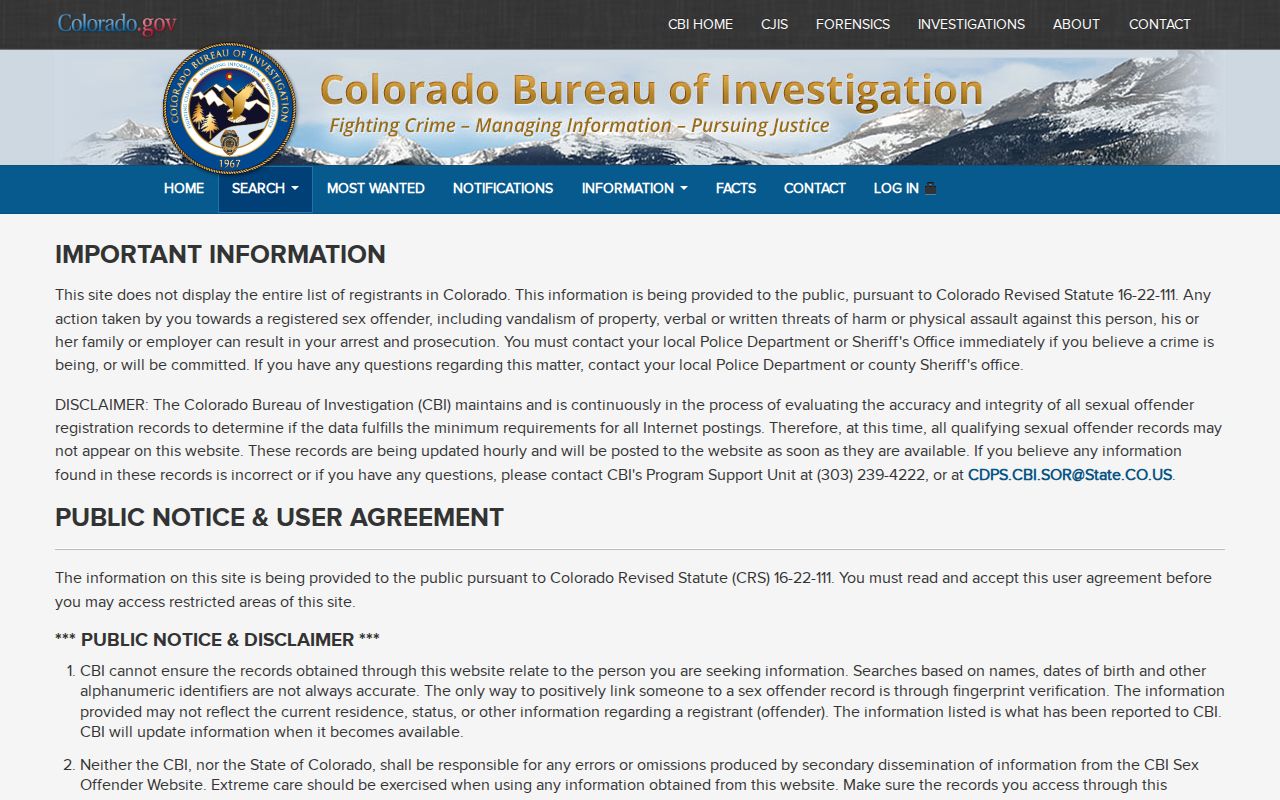
Registry searches have their own rules and exclusions, while court charge records remain tied to the court case and custodian.
The Colorado Department of Revenue CORA page gives a public-records overview for Colorado records, but criminal justice records use separate CCJRA rules.
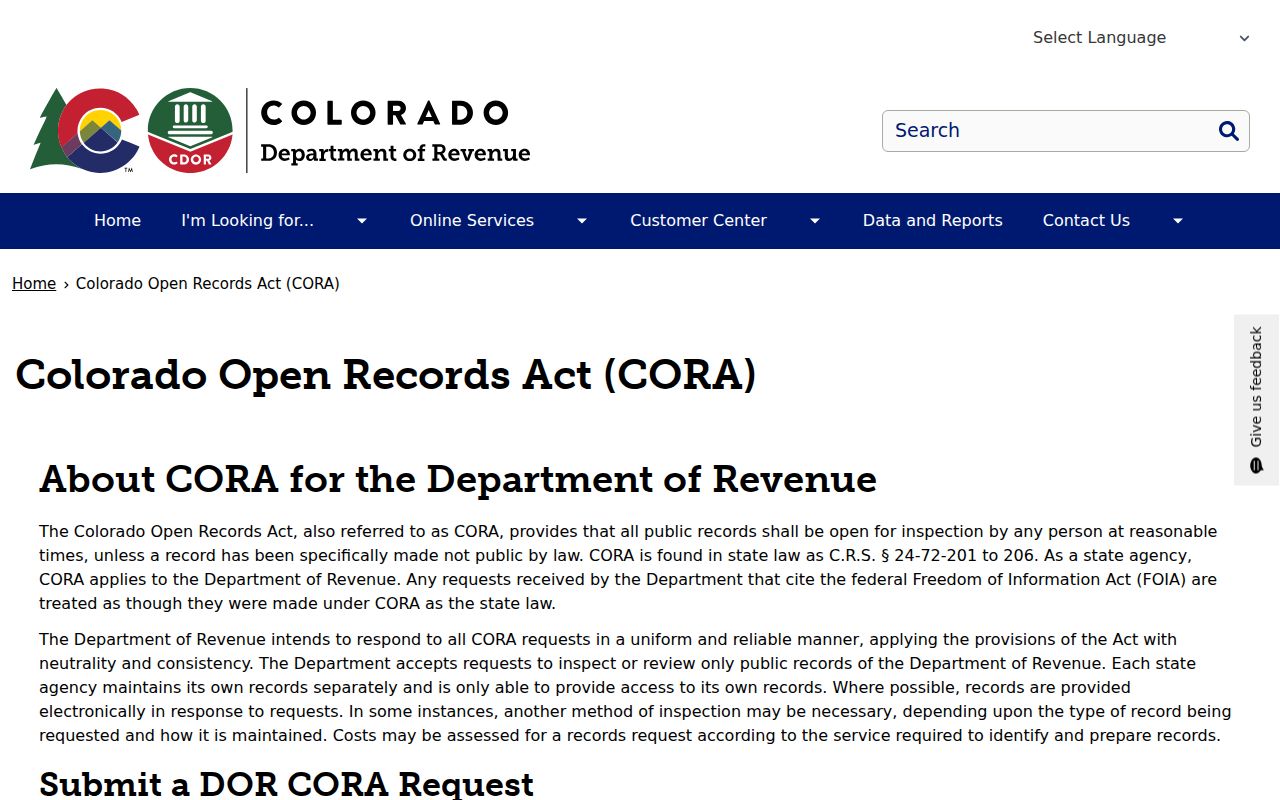
That difference is why an arrest report request, a DA record request, and a certified court charge copy can have different forms and limits.
Restricted La Plata County Charge Records
Some charge records are not available to the general public. Juvenile records follow the Colorado Children's Code and are excluded from ordinary public court data. Sealed cases, suppressed filings, and confidential records are excluded from CoCourts. Personal identifiers, street addresses, protected victim data, police officer information, juror information, and some financial or medical details may be redacted. Ongoing investigations and search warrant material can also be withheld.
Colorado adult criminal cases commonly use sealing rather than broad adult expungement. Sealing eligibility depends on the outcome, offense level, waiting period, restitution, pending cases, and statutory exclusions under C.R.S. 24-72-703 through 24-72-710. A sealed La Plata County charge may not appear in ordinary public searches even if an older docket reference once existed.
Note: A missing online charge can mean sealing, juvenile restrictions, municipal routing, data limits, or that no case was filed.